Now.... where did I put that goose....
It must be Michaelmas Day!
2026 and it is interesting to note that in many cases, our lives are still governed by a Christian saint's day which originated in the Eastern Orthodox church in the 4th Century in the ancient Anatolian kingdom of Phrygia (which now forms part of western Turkey) and adopted by the western church in the 5th century. St Michael - he of Arch Angel status, protector against darkness and of warrior fame - is remembered on this day and his feast day was designated by the Church as 29th September - hence Michaelmas Day.
In the UK - apart from in Scotland, which starts its academic year in mid-August, the school year still starts in September and this is because is it tied to the ancient festival of Michaelmas. The school year is modelled in the University academic year, which in turn is derived from the church calendar and the church ran the first colleges and schools. For centuries, harvest was a crucial time of year and required as much man, woman and child power as possible to all pitch in and help; and so pragmatically, in order to achieve maximum attendance, the start of the academic year was chosen to coincide with the end of harvest - 29th September. The start of the school year - in England, Wales and N Ireland - has gradually regressed to within the first two weeks of September but some universities including Oxford and Cambridge still retain the post Michaelmas start date.
Michaelmas was also one of the medieval years 'quarter days' the others being 25th December, 25th March and 24th June. These dates divided the year into quarters and were used in the administration of tythes, rents, contracts and legal agreements and are still regularly used in Agricultural and Commercial law.
Michaelmas was the end of the working agricultural year and so a time of celebration and transition into the new farming year. There were rents to be paid, leases renewed and often labour hired at Michaelmas Fairs, which were sometimes known as Mop Fairs. Like many festivals, Michaelmas was marked by feasting and the pièce de résistance was the Michaelmas Goose. As the fields were harvested, the geese were turned out into them to feed on the stubble so by the time it came the Michaelmas, it was time to sell or eat your goose and being able to do this, showed a prosperous year - behind and ahead: thus, the goose moved into tradition as the centre piece for the Michaelmas Feast. A saying, now lost in the mist of time 'He who eats goose on Michaelmas Day; Shan't money lack or debts pay'. It was also thought that if the bones of the cooked goose were brown, the coming winter would be mild but if white - a hard winter of snow and frost was to come.
The time of Michaelmas was a major time of celebration and created synergy and reinforced the bonds in a community, uniting the religious devotion of that time with the practicality of the agricultural rhythms of the year, each creating a blend of traditions and rituals - both spiritual and temporal. The importance of the festival however, began to fade following the Reformation and the death nell was gradually sounded between 1773-1845 - when a number of enclosure acts were passed by parliament and which - in simplistic terms - allowed the enclosure of common land by transferring the ownership to farmers and landowners, and so disenfranchising the agricultural workers and peasants who made up most of the population of rural England; and who eked out their wages by their right to use common land to keep poultry and livestock, the produce of which provided them with a small income. Add into this the arrival of the Industrial Revolution - 'A Good Thing' in so many ways but not in others - and the result was a devastating effect on a centuries old way of life, as workers had to gravitate to the fast-growing towns and cities to find factory work, in order to survive - or in many cases not.
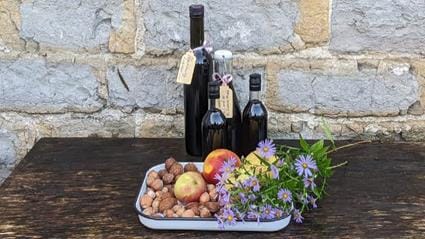
The cyclic narrative of seasonal growth and harvest is as old as agriculture. We live in a very different world from our forebears but we still should be aware of what has gone before as it is part of us and who we are - our farmers are still working hard to provide our food. So, celebrate Michaelmas - roast a goose maybe, pick some Michaelmas Daisies, collect seeds to sow next spring, go for a night walk, enjoy the Autumn days and celebrate the turning of the wheel of the year.