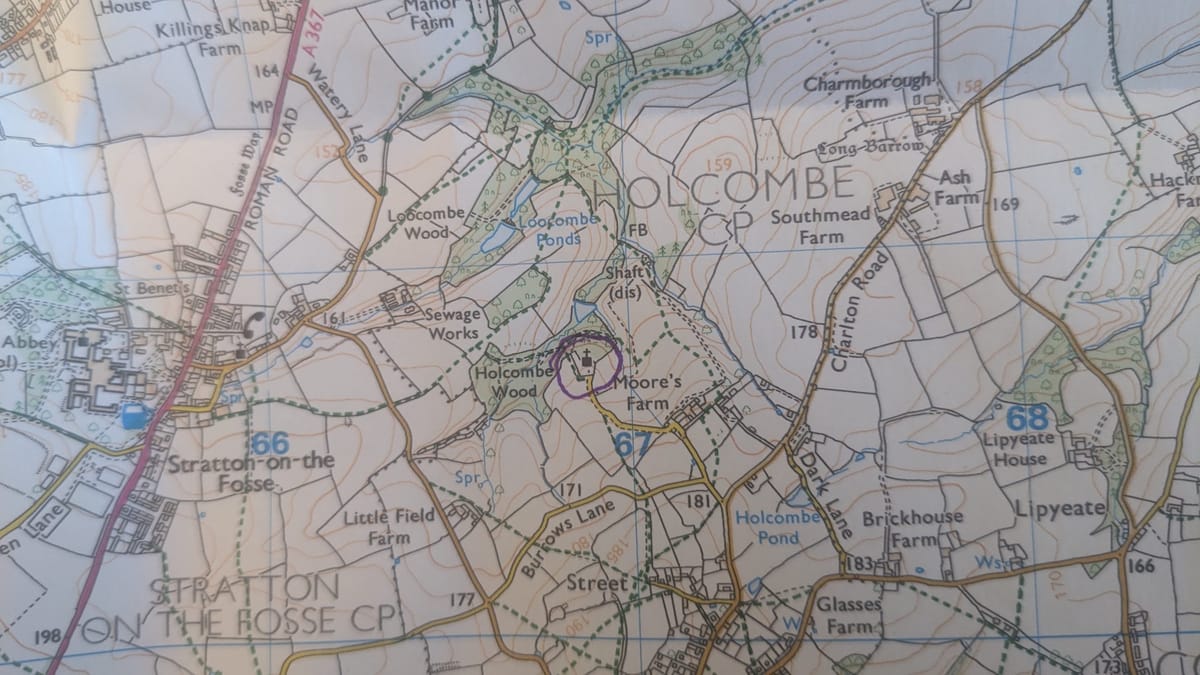
On the eastern escarpment of the Mendips, close to part of the Roman road stretching from Lincoln to Exeter, lies the village of Holcumbe. An ancient manor, it was noted in the Domesday Book of 1086, although its roots most likely stretch back much further into the distant past.
As William of Normandy set his sights on the kingship of England, gathered his invading army and set sail for England in his new flagship, the Mora, which his wife, Matilda, had kindly given him, the Manor of Holcumbe was held by Alfward, who, it is believed, had held substantial landholdings across Wessex for some time.
If you visit the village of Holcombe today, you will find a pleasant place with a Victorian church, a very good village pub, some pretty houses and an air of prosperity and rural charm.
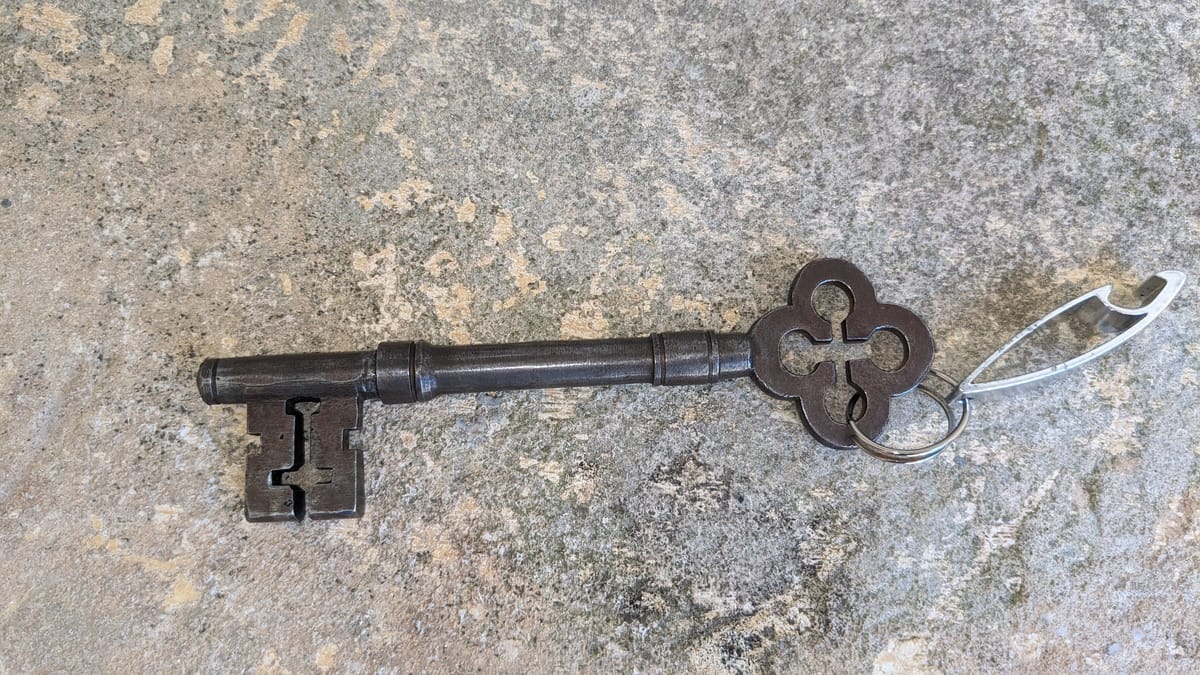
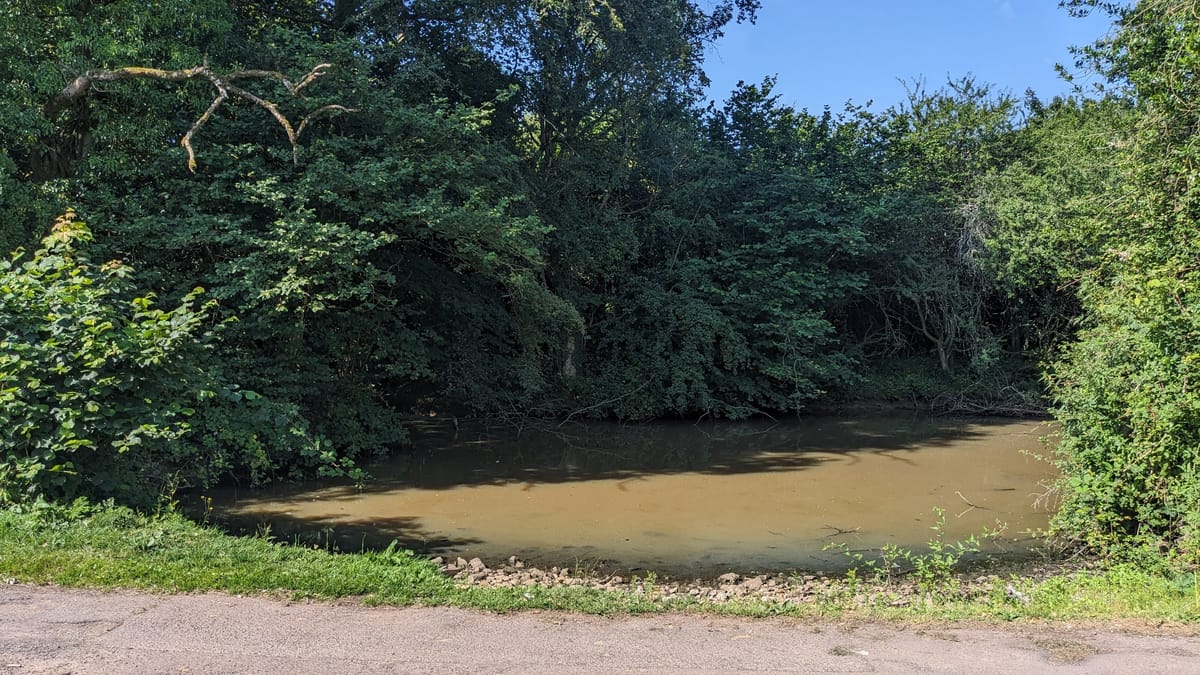
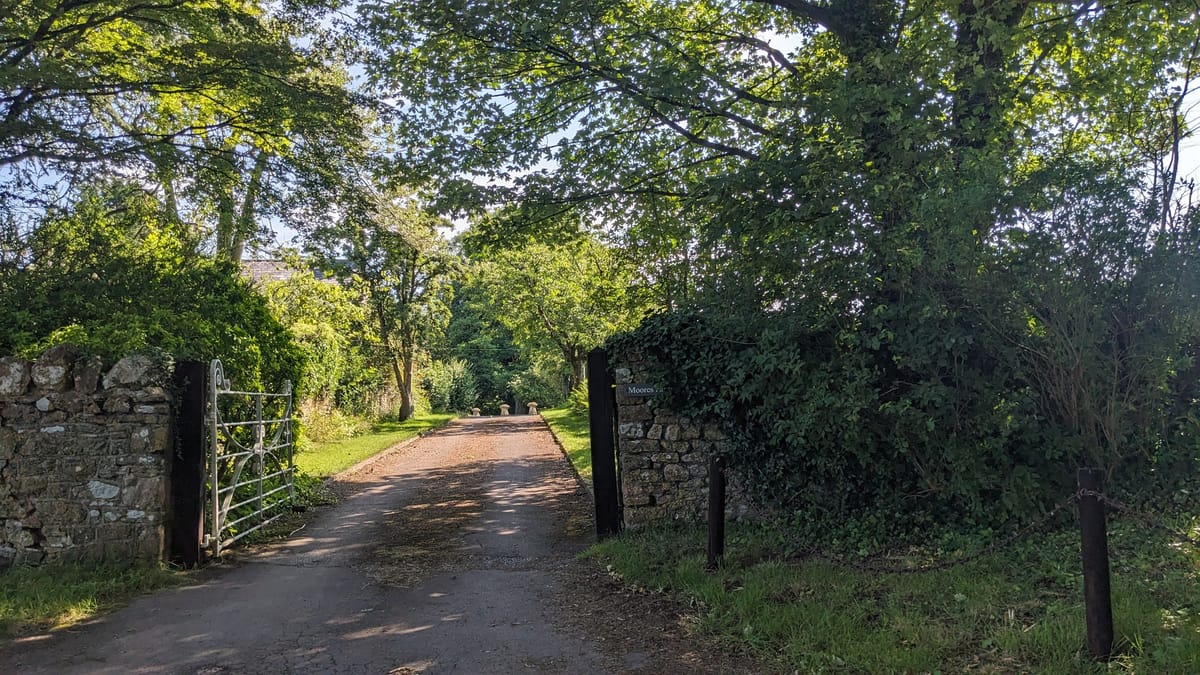
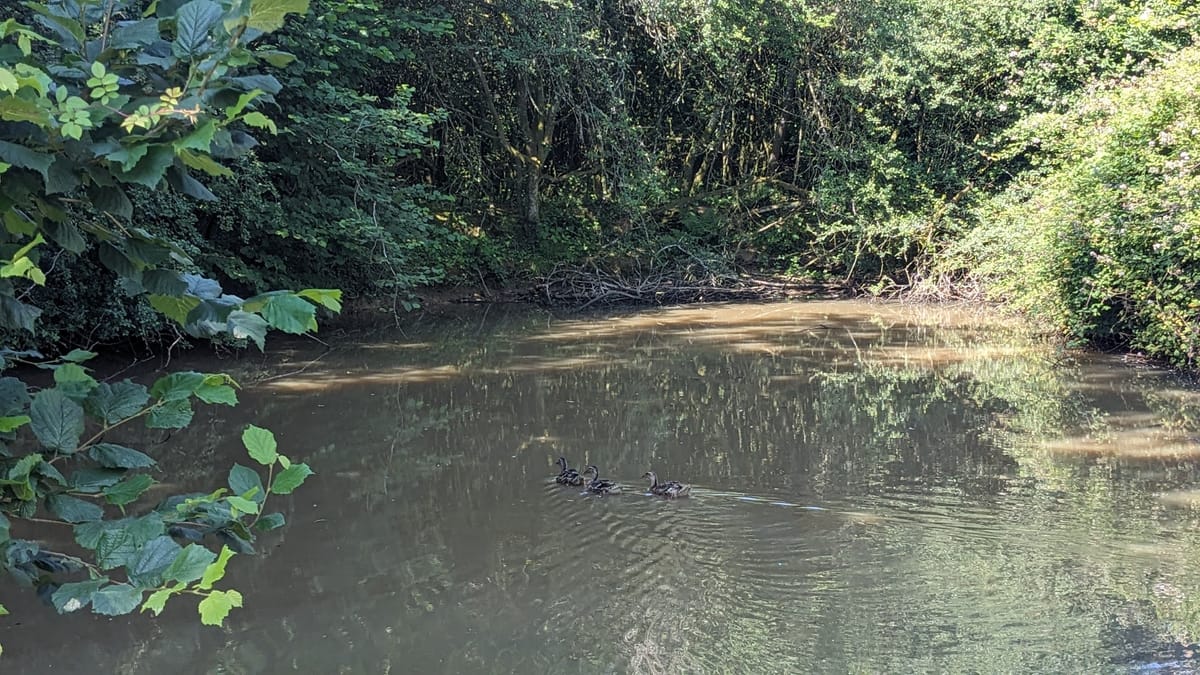
However, if - like The Wessex Wanderer, you take the road less travelled, collect an ancient door key from a local house and go down the lane on your right, just before you enter the village from the Kilmersdon direction, you will soon find an old farm pond on your left - complete with a family of ducks - and, a little further on, a lovely group of farming-related buildings.
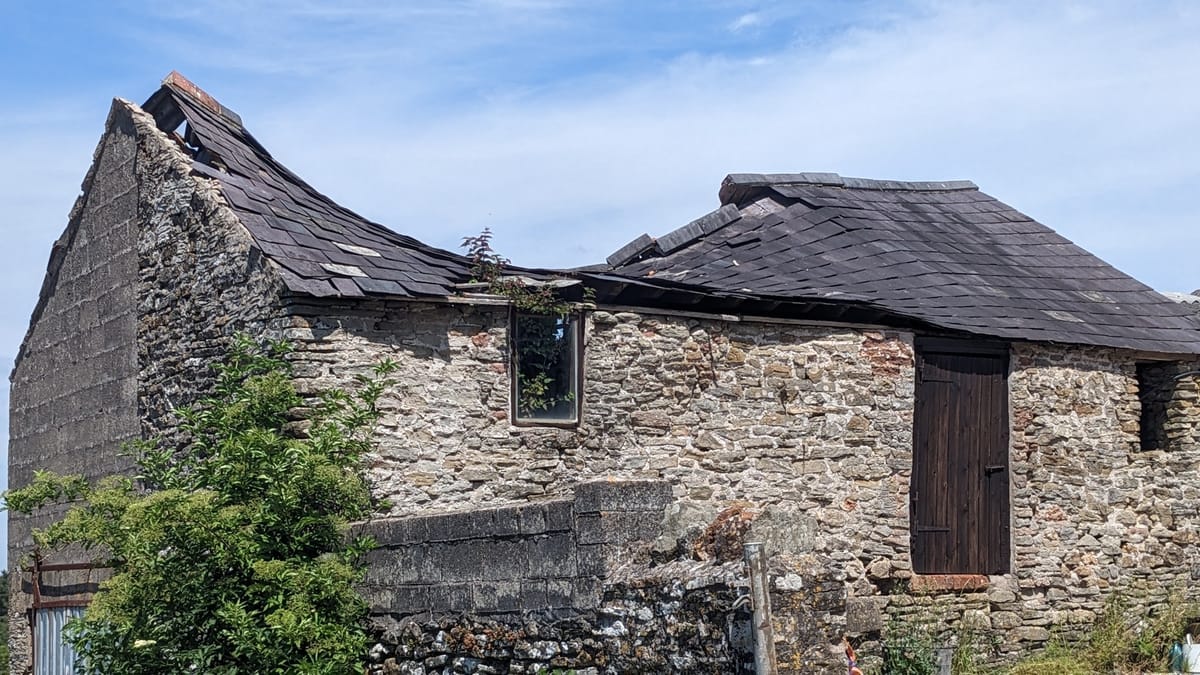
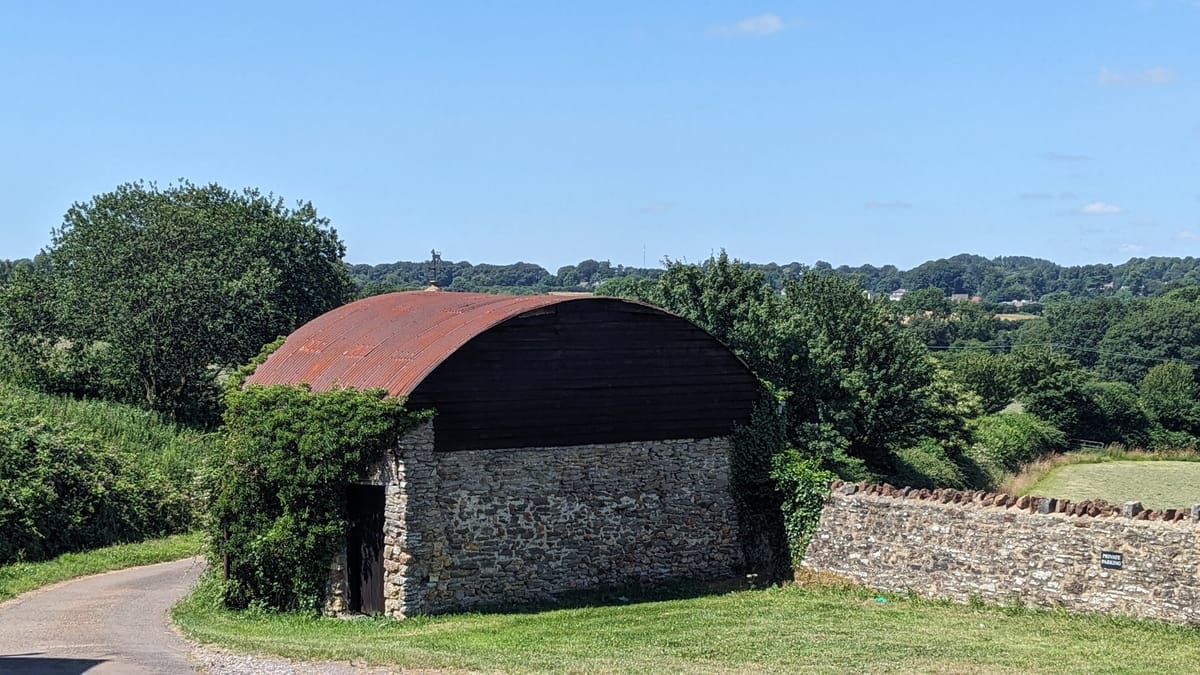
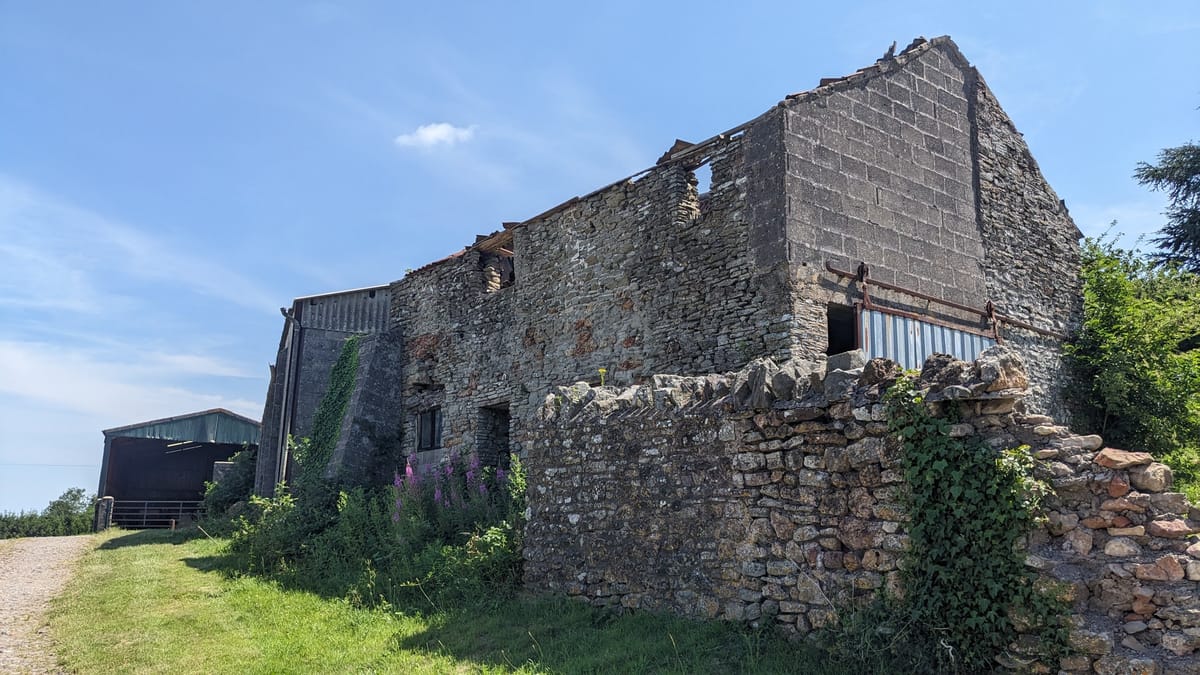
Moores Farm belonged to the nearby Babbington House Estate until it was sold in 1920, and it has remained in the same family's ownership since then. At the time of writing, I think that it has recently been sold, either as a whole or in lots. The farmhouse is a lovely mid-19th-century, unlisted, stone-built house with substantial traditional gardens. Across the lane is what appears to have been a very well-executed 'barn' conversion, together with a neat range of outdoor utility buildings. Grouped around the old farmyard are some modern farm utility buildings, plus a somewhat derelict building - part barn, part dwelling - which I think could probably be saved with some sympathetic input. The lane continues past the farm, and to your right is a very nice example of a newly refurbished storage building, with the added attraction of a domed corrugated roof.
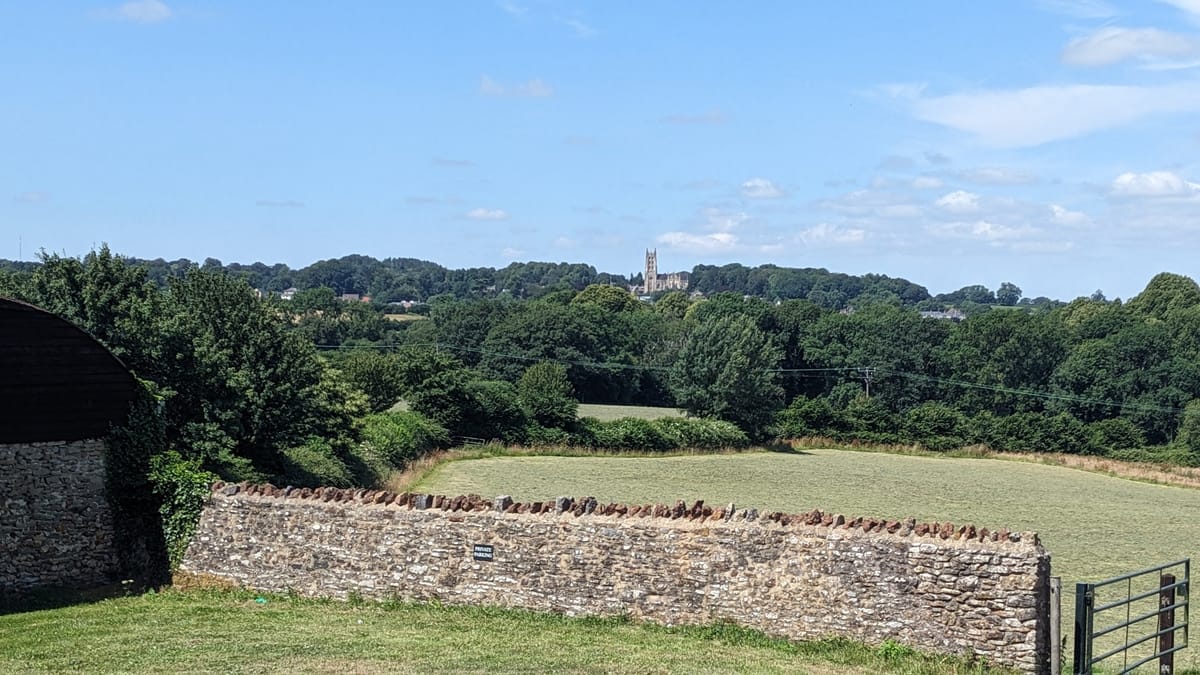
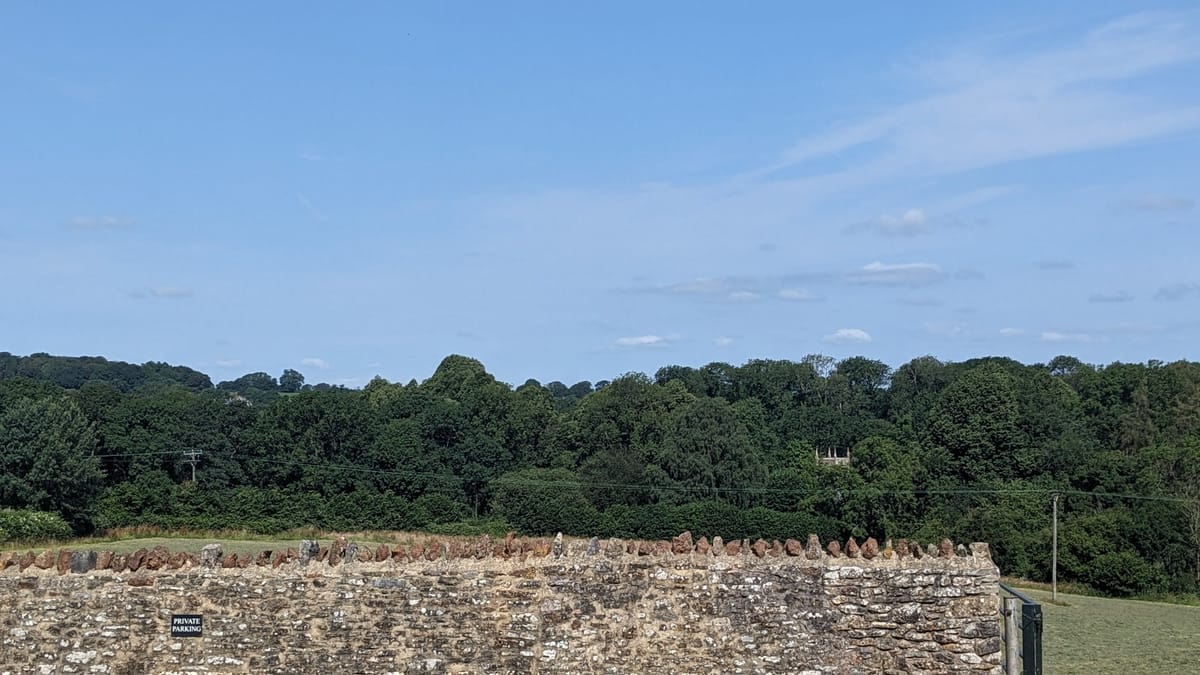
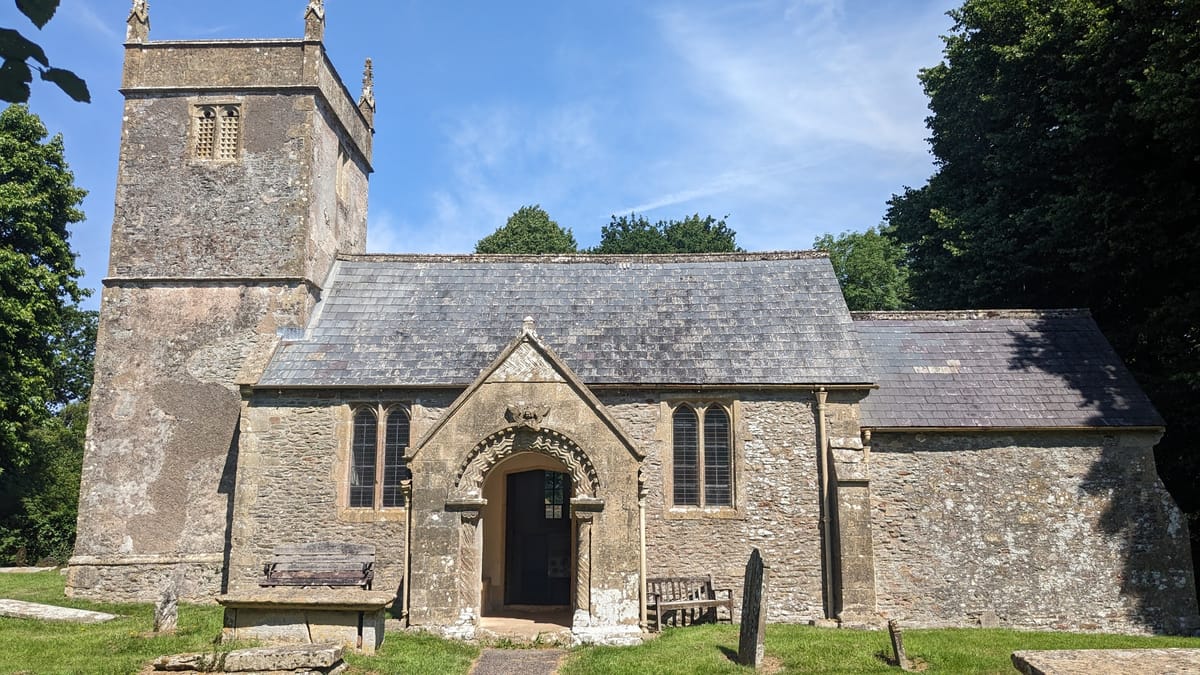
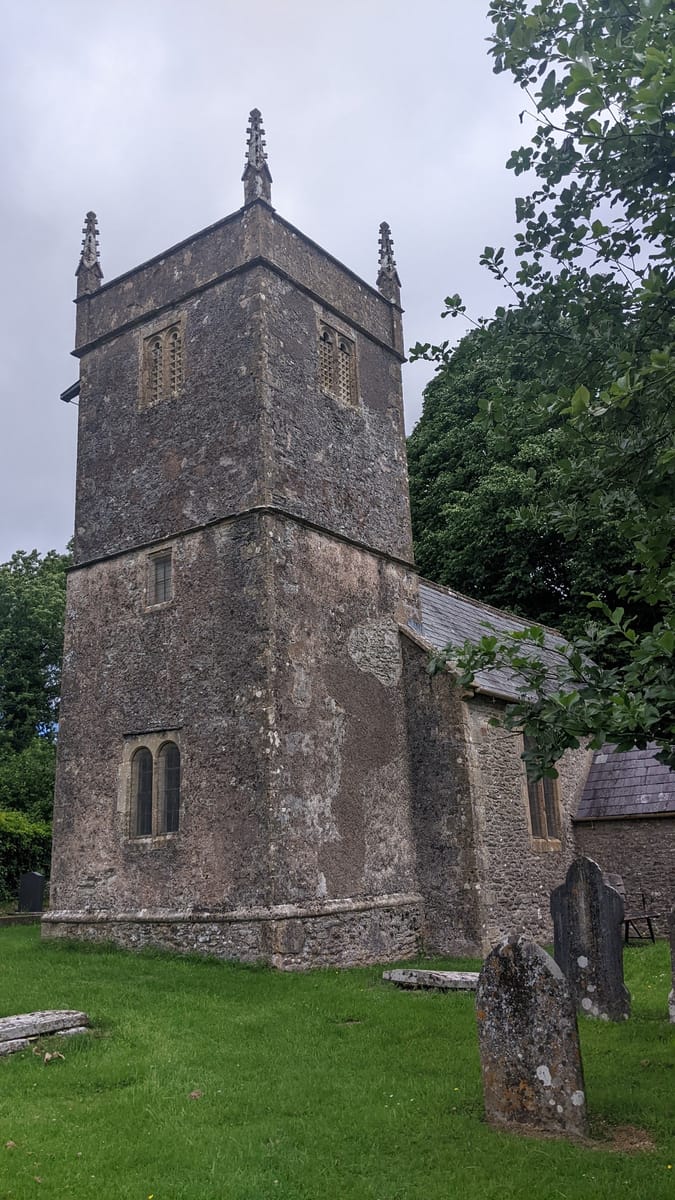
From this vantage point, you can see the mighty Downside Abbey, built between 1876 and 1938. However, if you lower your gaze, you will see the top of a little church tower squatting amongst the trees. Follow what is now more of a farm track down the hill and, as you round the corner, you will be rewarded with the sight of Holcombe Old Church nestling in its ancient space, as it has done for centuries. The track goes no further - it has fulfilled its purpose.
This little church was once the centre of village life, watching over the Manor and its people. Then, in 1348, the Bubonic Plague swept across Europe from Asia, believed to have spread via fleas carried by rats, which were abundant on medieval trading ships sailing between Europe and Asia.
Sadly, our little village of Holcombe suffered greatly from the Black Death. Consequently, the village was deserted, and the remaining inhabitants moved further up the hill and established the Holcombe we see today. In the fields surrounding the church, noticeable mounds are said to be the remains of the original village and the burial site of plague victims, including their Rector. Locally, Old St Andrew's is still called the Plague Church.
With Saxon and early Norman roots, the church we see today dates to the 12th century, with further additions and alterations during the 16th and 17th centuries. There is both physical and written evidence of earlier religious buildings on this site, so it is likely that the present church evolved from these.
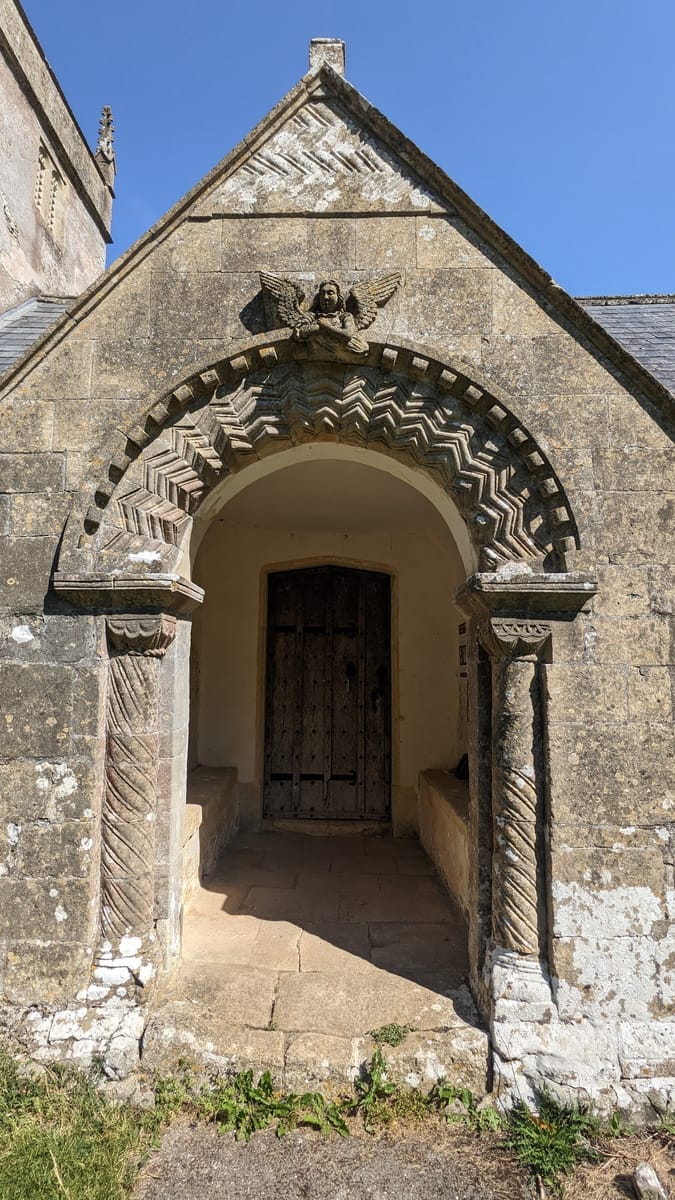
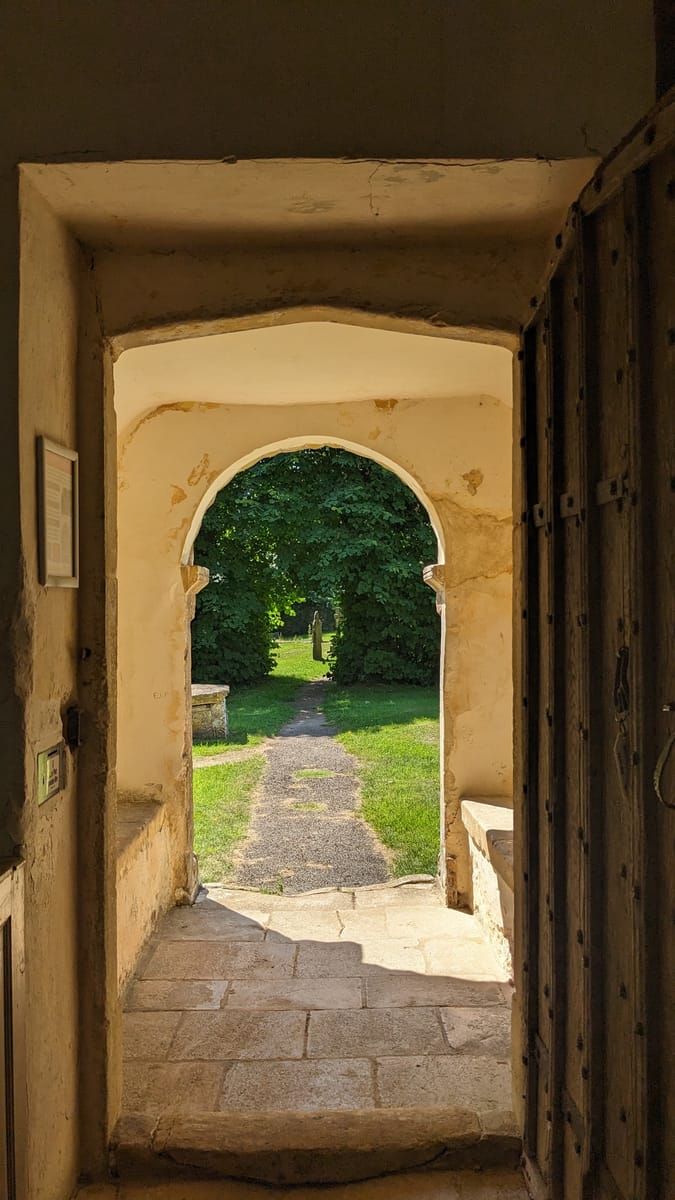
The south porch has an interesting reset Norman doorway, with spiral-fluted carved columns, scalloped capitals and deep chevron carving on the arch. At the top of the arch is a 16th-century keystone in the form of an angel. Of particular note is the eastern-side cushion capital, which has an inverted inscription on one of the large limestone blocks used in its construction. The inscription predates the 12th-century capital cut from the same type of stone. This inscription - which is incomplete - mystified scholars for years, but the current conjecture is that it is Anglo-Saxon or, very possibly, Celtic in origin. I feel that, whatever its date and whatever the inscription may mean, it is incredible simply to be able to see and touch it!
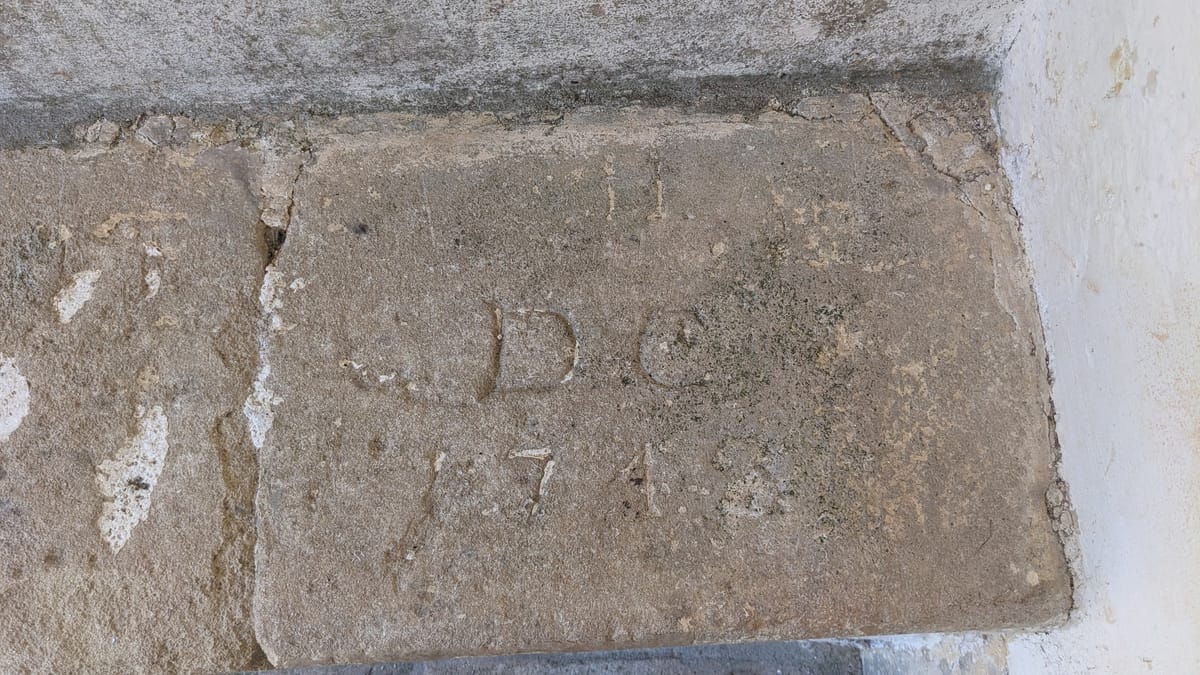
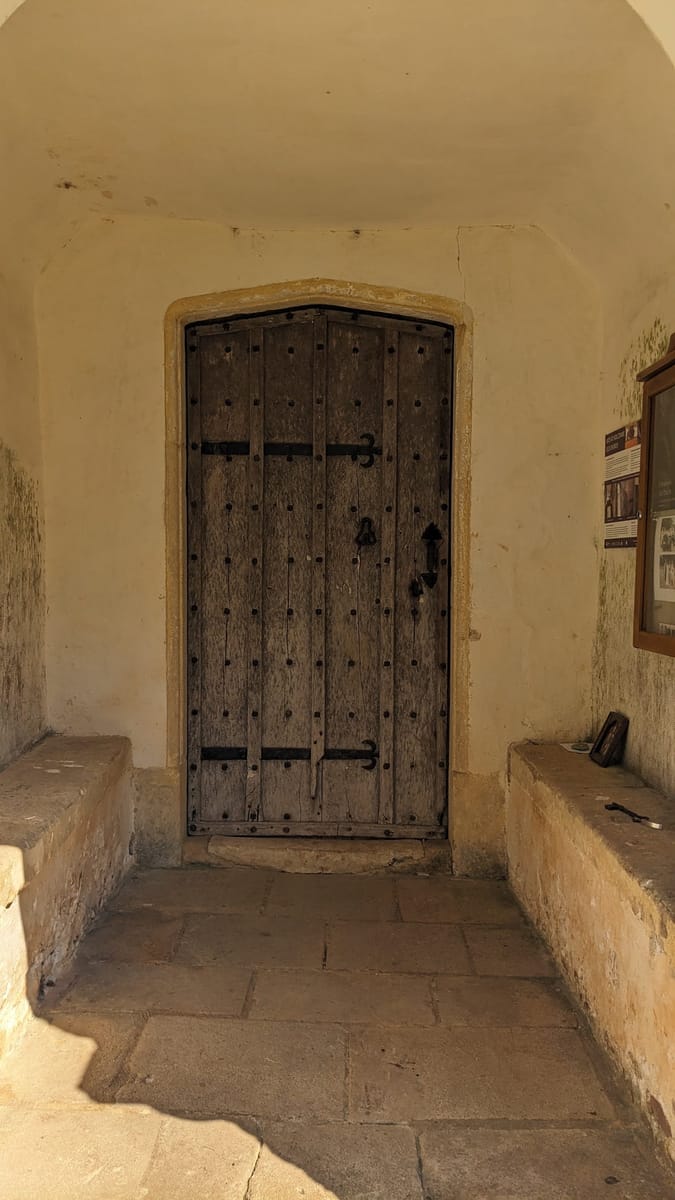
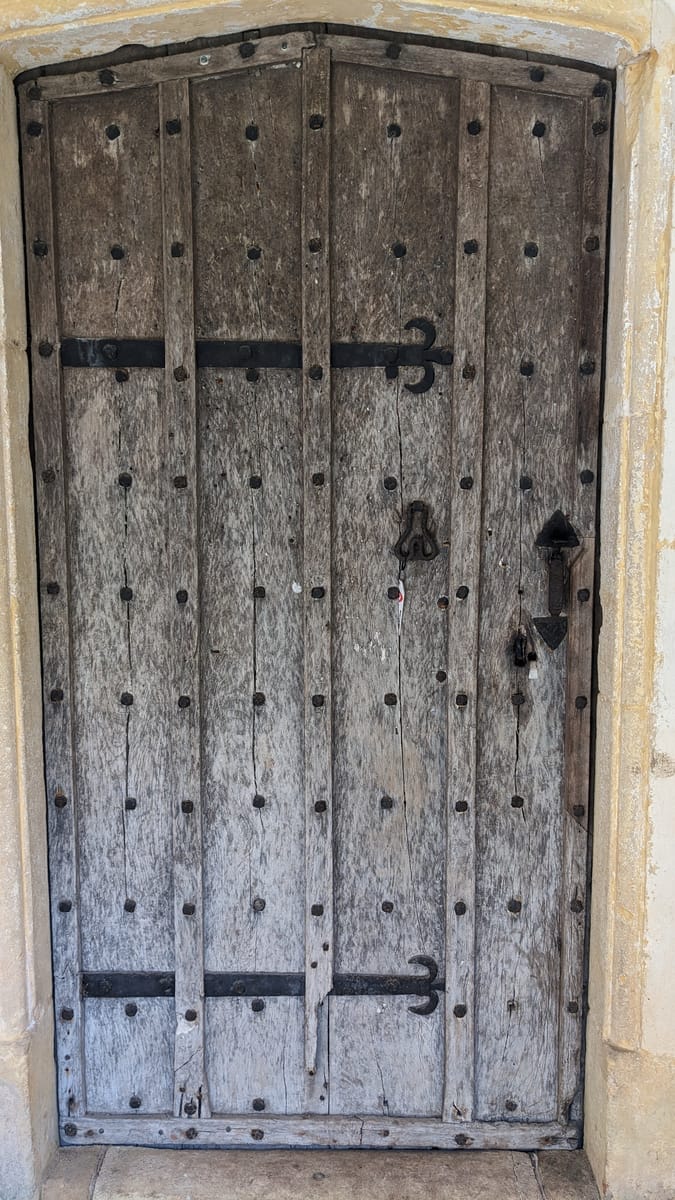
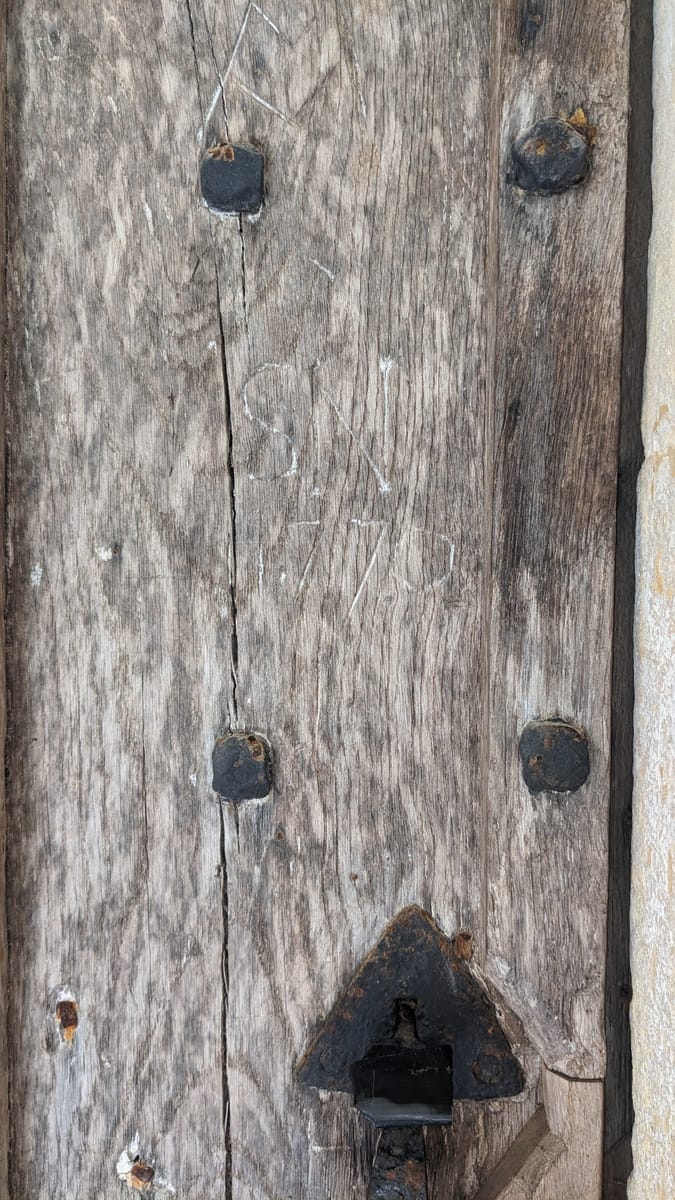
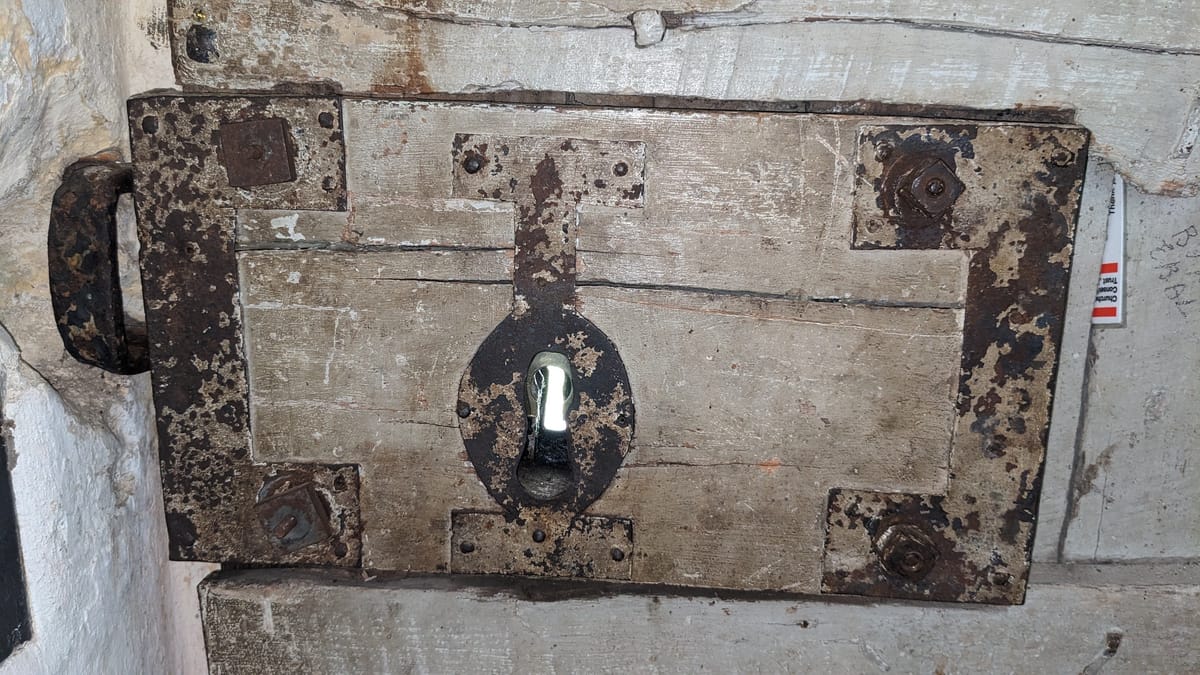
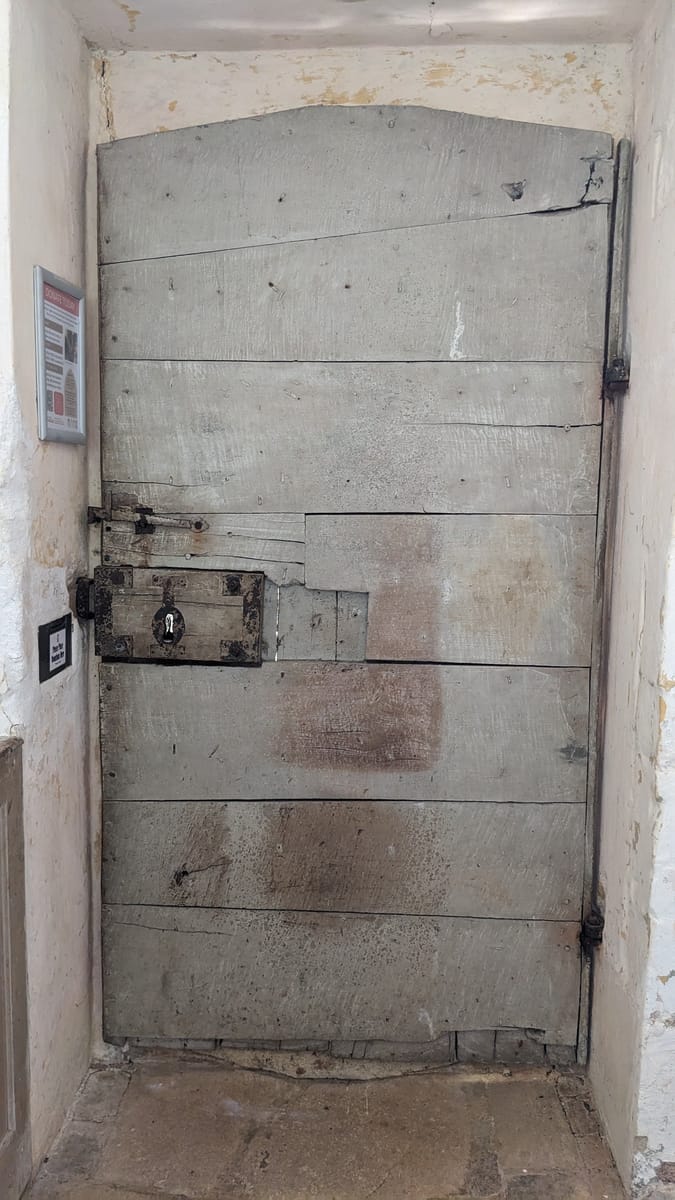
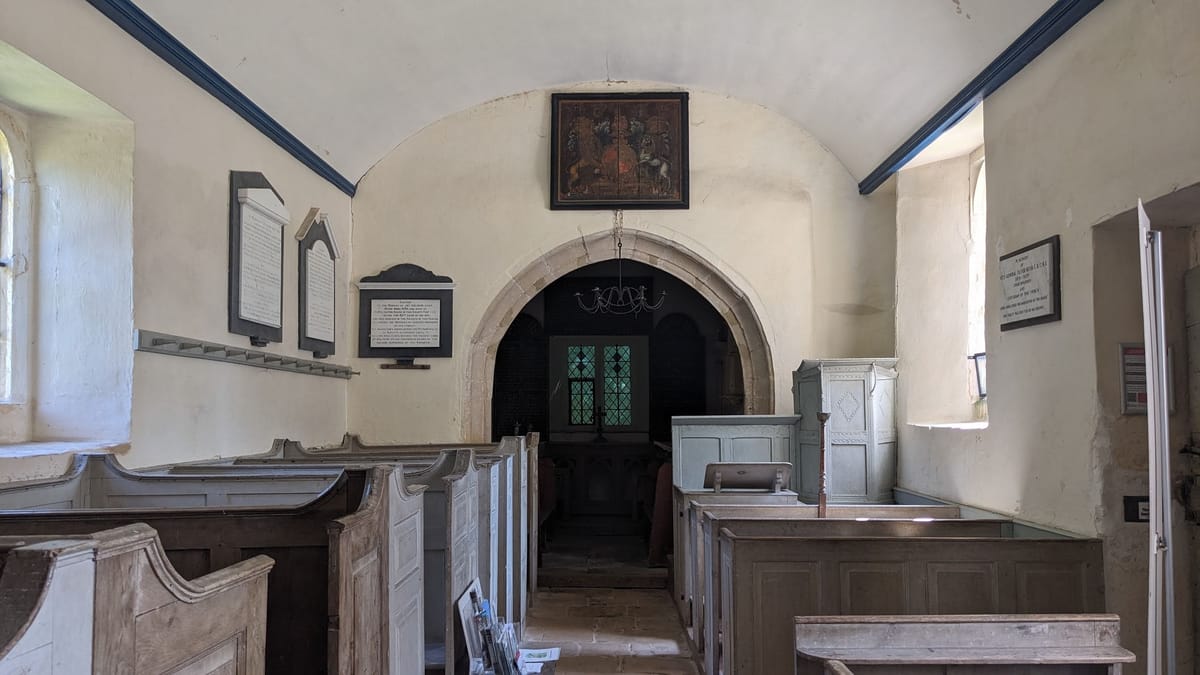
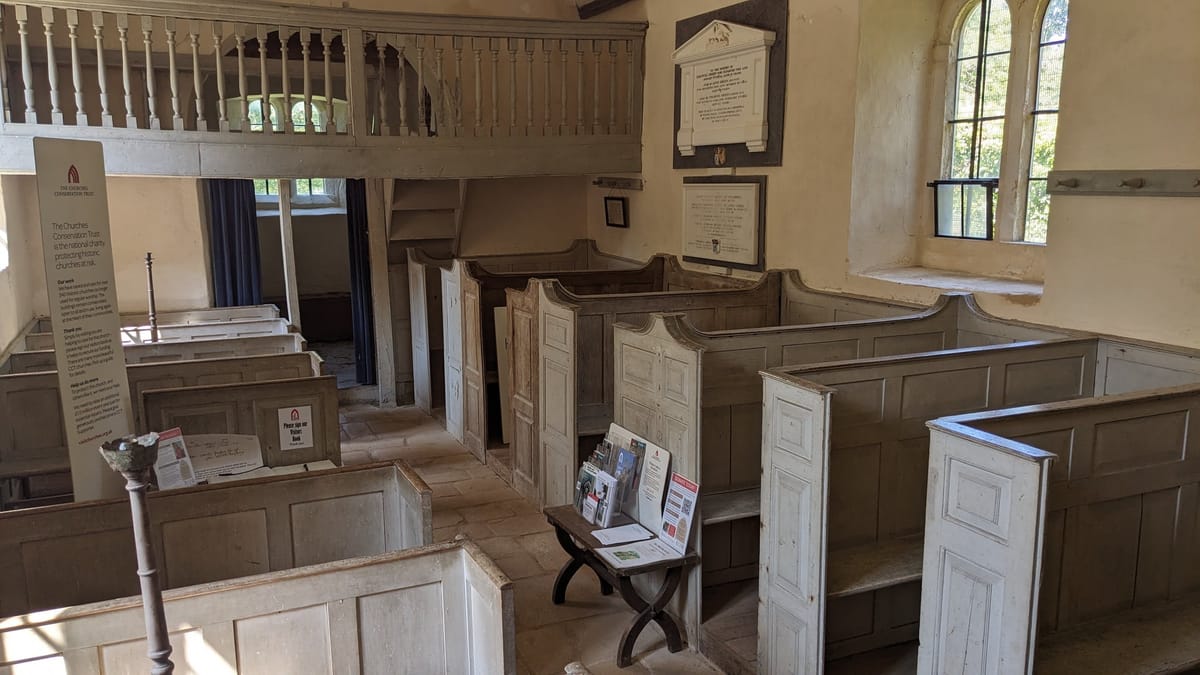
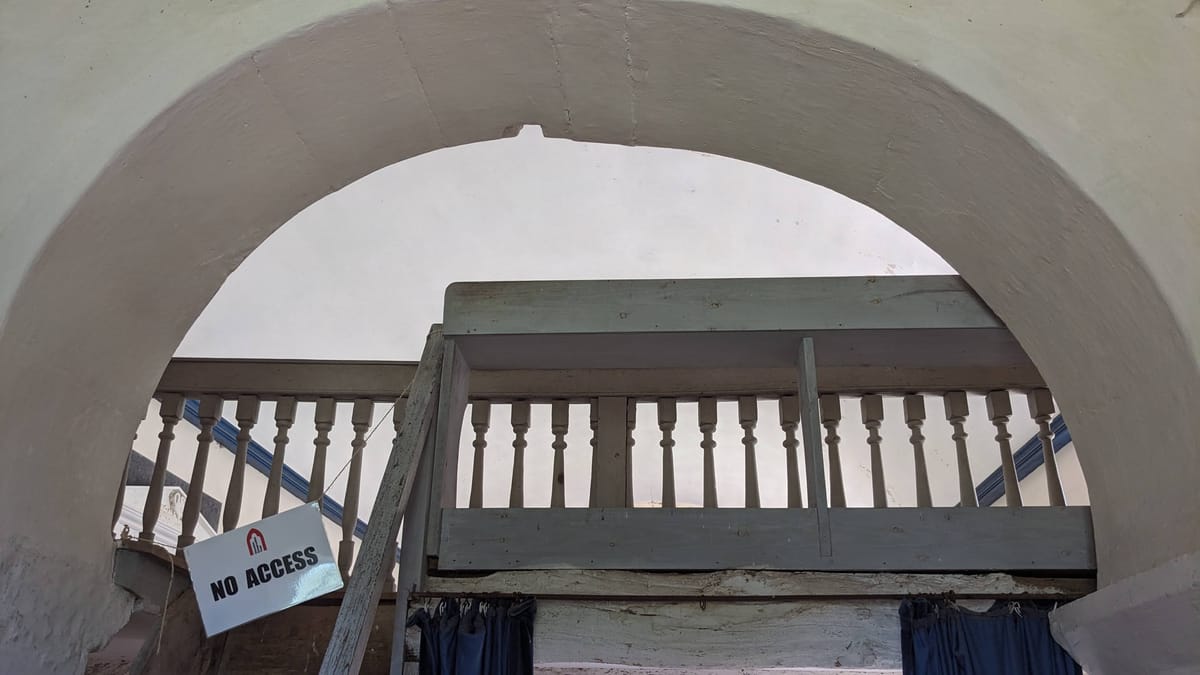
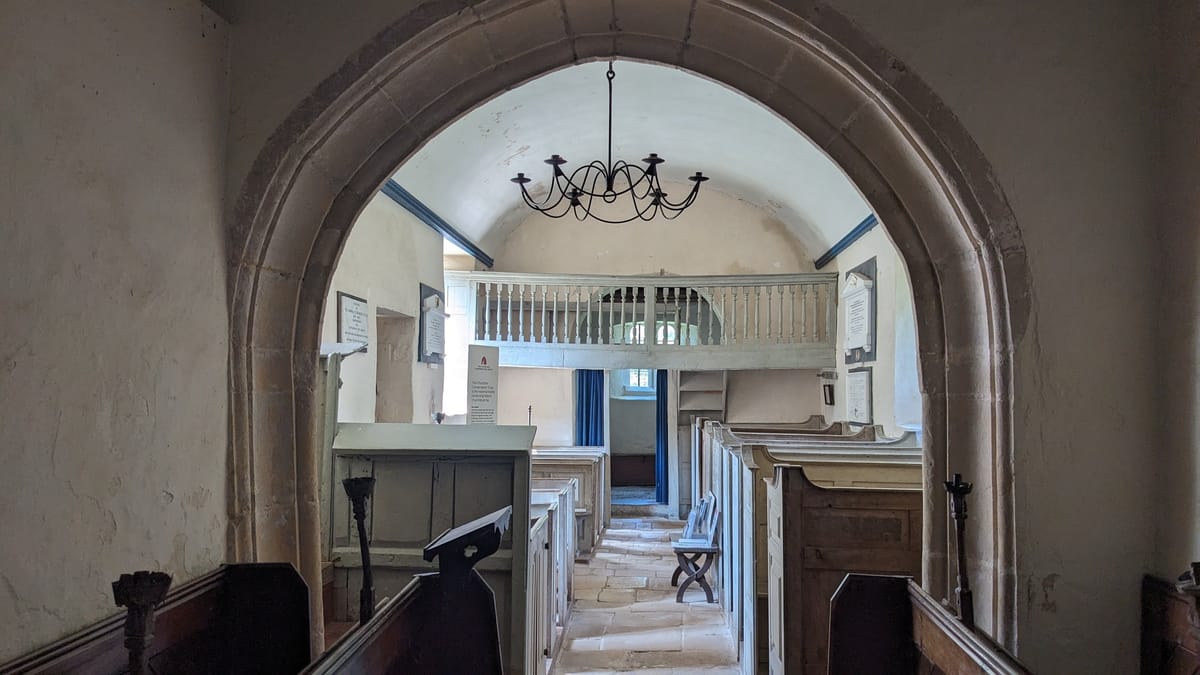
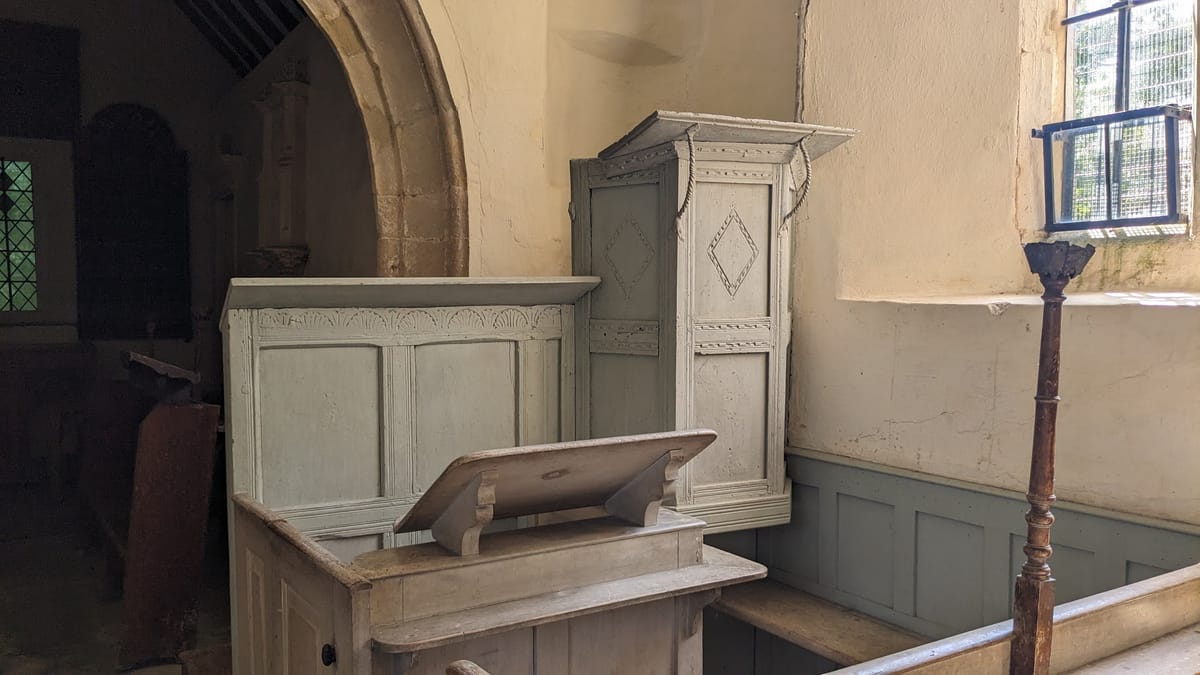
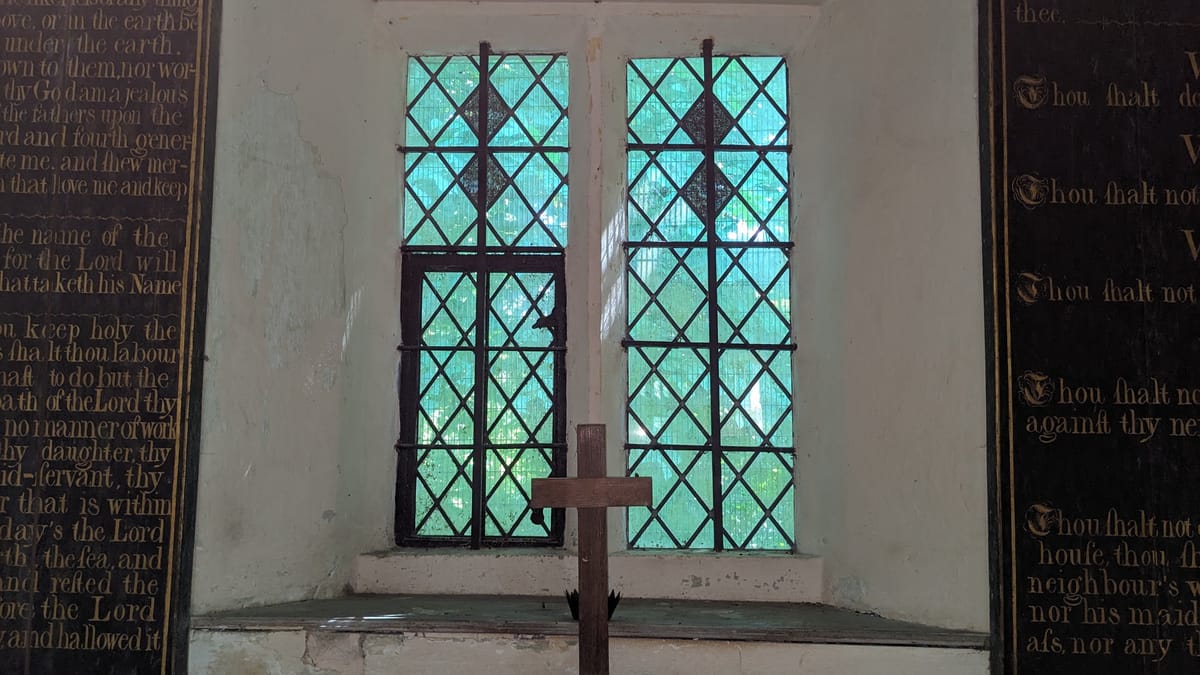
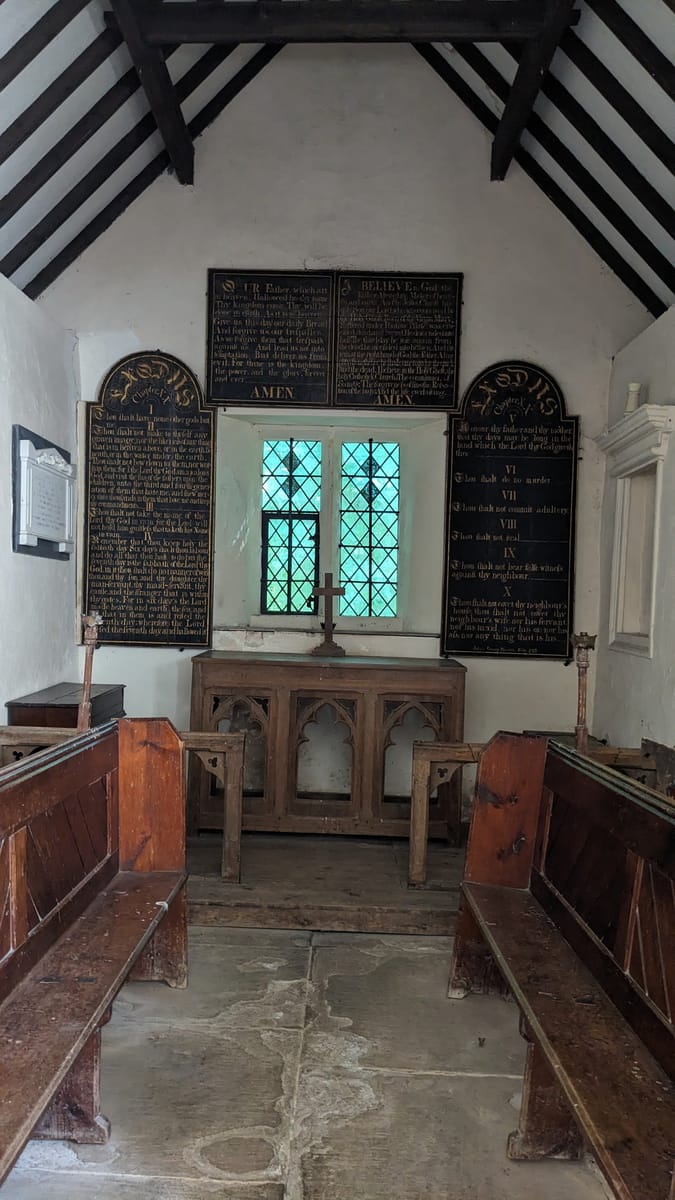
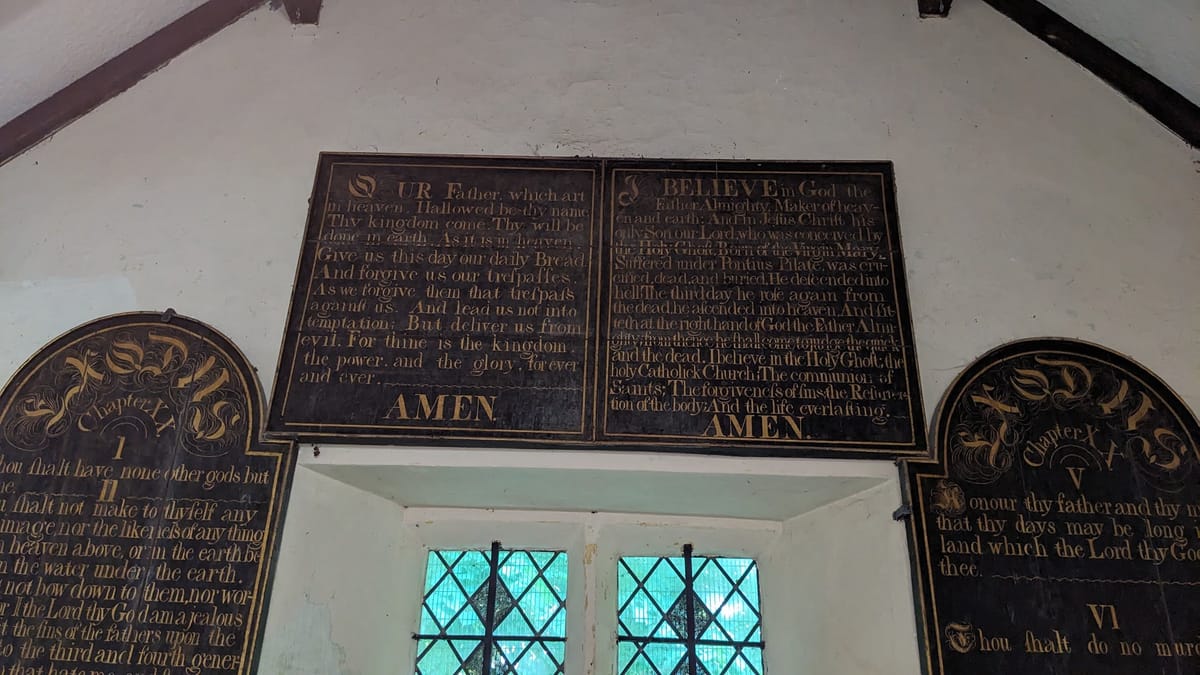
After struggling slightly to turn the large key in the lock of the rather fine medieval door, I found a bit of a surprise! Expecting to have to search for the light switch, I was greeted by lightness and a distinctly Georgian feel. All the woodwork is painted a soft grey, and the walls are white. Lovely, high box pews sit to the north of the nave, with benches to the south, the front one of which incorporates a Clerk's Desk, complete with a door. The pulpit is Jacobean in origin but has been slightly remodelled. Looking east towards the bell tower, there is a wooden gallery which would originally have been for the musicians who played at services. Many of these galleries have been removed over the years, so it is lovely to see one still in situ. The floor, from the porch and right throughout the church, is paved with mellowed flagstones. There is no organ in the church, and the font - believed to be Norman - was taken up the hill to the new St Andrew's Church when it was built in 1884/85.
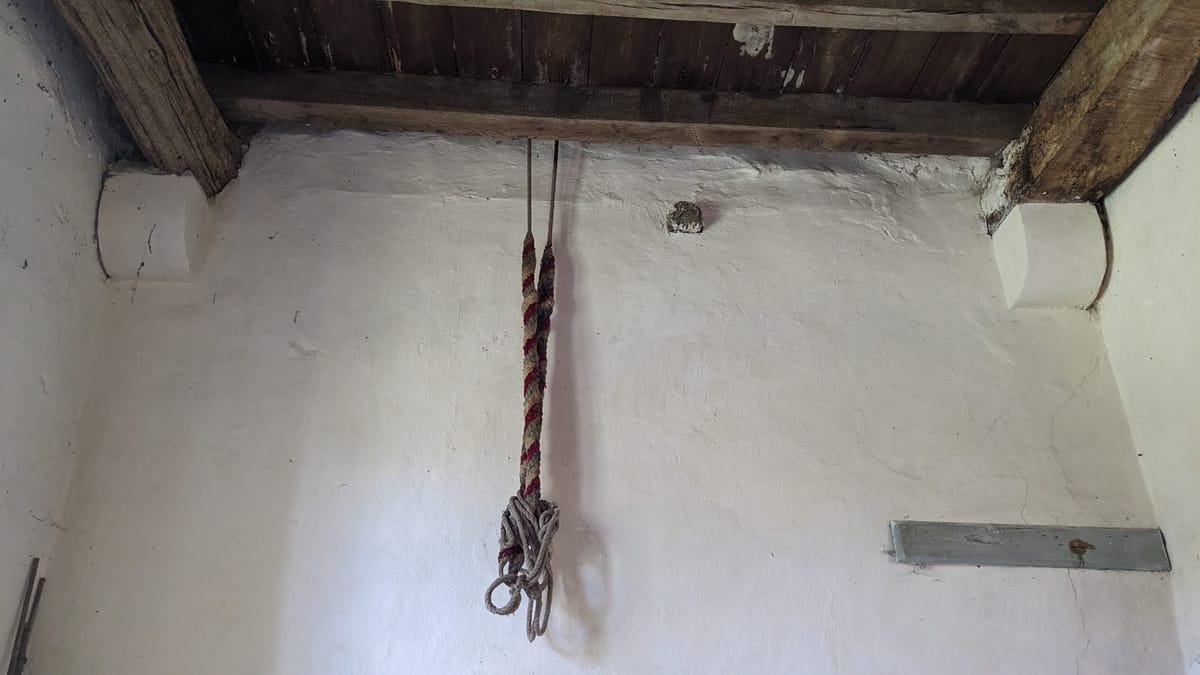
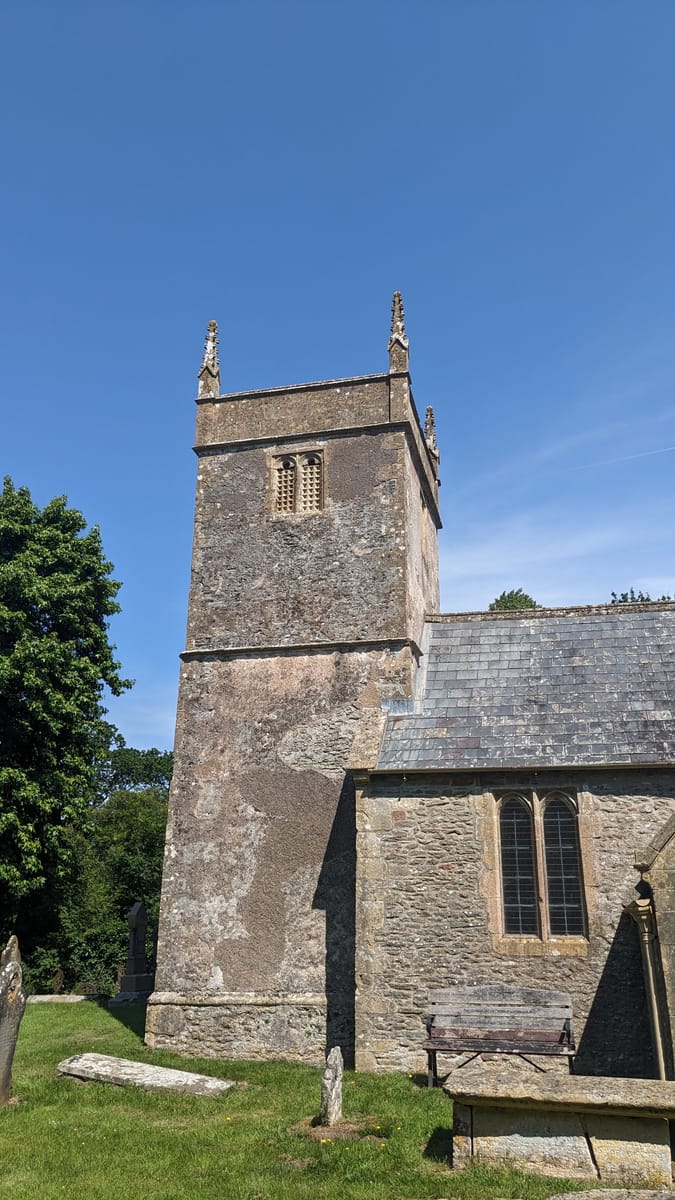
The county of Somerset is well known for its soaring church towers, but here we have a small, unpretentious, two-stage tower which holds two bells cast at Bristol Foundry - the treble in 1425 and the tenor in 1545.
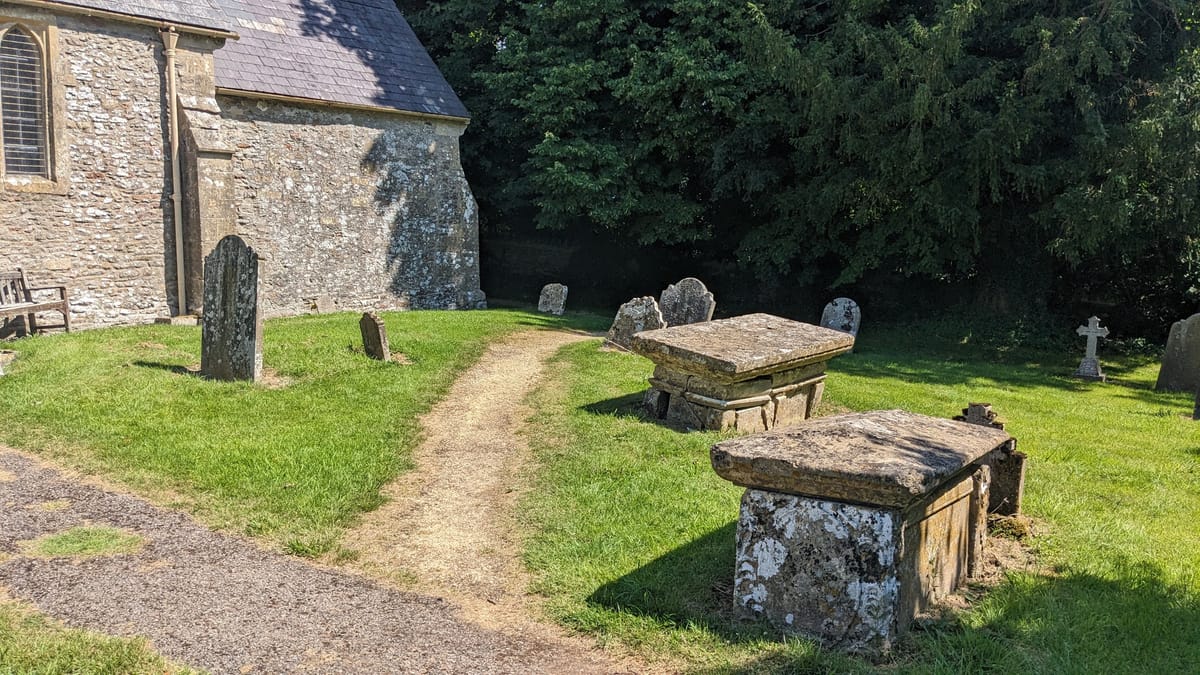
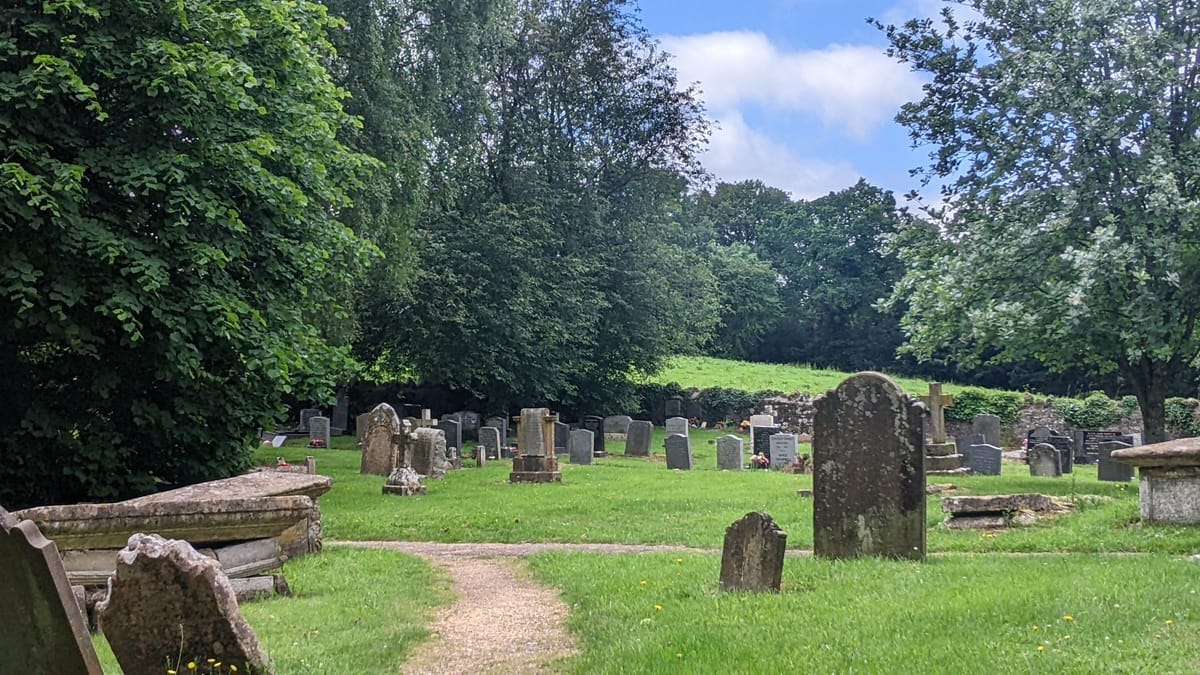
It is often surprising what - and perhaps who - one finds in churchyards. As I wandered around the churchyard, which is also the site of two Commonwealth War Graves, I noticed that a small hole had been made through the stone on the external corner of the nave, between the porch and the tower. On closer inspection and following some research, it transpired that its purpose was to enable the parson to tether his pony during services - quite unusual, I imagine, and a rather nice find, I feel.
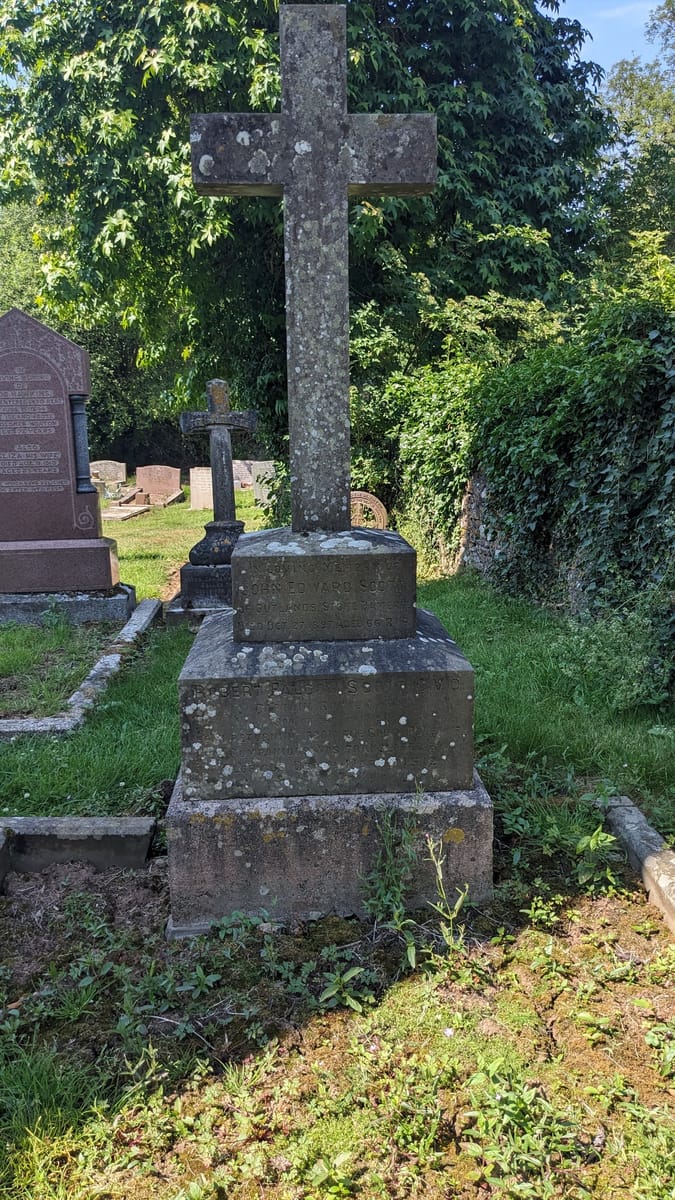
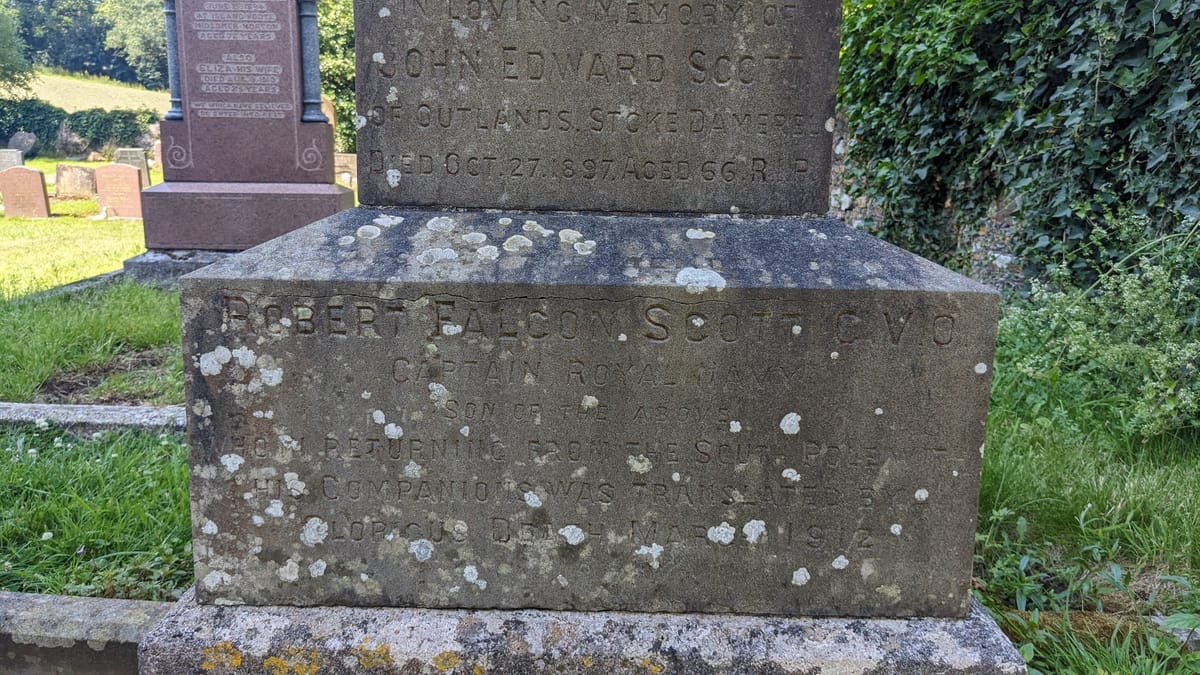
Around the north side of the church, I came across a large monumental grave commemorating members of the Scott family. John Scott, the father of Robert Falcon Scott - perhaps better known as 'Scott of the Antarctic' - moved his family to Holcombe following the loss of the family's brewery business in Plymouth and his own financial ruin. John and his wife rented Holcombe House, now known as Hop House, where he became brewery manager for Thatcher Brothers Ltd. The family must have been happy in Holcombe, as they chose to be buried in this little churchyard. Although Robert is not with them in body, he is commemorated on the grave and will possibly be with his parents, his brother Archibald and two of his sisters, Rose and Grace - at least in spirit.
As I leave Holcombe Old Church, the sun is still warm, but time has moved on.
A deep stillness now permeates this little hidden coombe, with its ancient church and gentle farmland. Somehow, the sounds and people - those who have crossed this threshold, worked the land and led their lives - seem to be whispering their communal memories through my consciousness, down the centuries.